
DPC For Providers
Hello all! Welcome to a really brief summary of Direct Primary Care!
For those who do not know, Direct Primary Care (DPC) is a healthcare model that brings direct, frequently quick, and cost-effective care to patients. If you imagined a good ol’ fashioned doctor answering a rotary phone or fitting a sick child onto the schedule for a relaxed 30 minute appointment, you aren’t that far off! Maybe the technology has changed a smidge, but the idealistic care remains the same.
Direct Primary Care allows providers to see patients:
1. With the time they need, and
2. In a cost-effective way.
3.And limit the frivolous tasks that drive us insane
We are eliminating the most common roadblocks to excellent care, and surprisingly doing it in a way that saves families money.
If you have landed on this page, you are likely a healthcare provider who is curious about Direct Primary Care. Here is a summary that might answer questions you might have…
Current Healthcare vs. DPC Awesomeness
Current Healthcare
Patients and providers are frustrated…
Doctors are overwhelmed and tired of providing uninspired care.
Decent insurance plans are too expensive and out of pocket costs are rising

Patients are unable to access their favorite doctor in a timely fashion
Even with insurance, copays and surprise bills are common place
Direct Primary Care is an Answer to these Problems…
Patients:
-Have very easy provider access
-Pay predictable monthly fees
-Avoid urgent cares, ERs, and specialty visits
Providers:
-Choose their appointment length
-Decide on the number of patients in their panel
-Do not have to argue with insurance or admin about what kind of care they provide
-Receive predictable reimbursement
Frequently Asked Questions from Providers…
What is concierge medicine? How is it different from DPC?
I’ll be honest - you are going to get different answers from different people. I’ll give you my interpretation and then share the opinions of a few others.
Concierge is where a provider bills a patient’s insurance, and then also bills the patients for the convenience of that care. It is usually a double-billed system. DPC does not double bill patients - it is supposed to be cost-effective care.
Many DPC docs talk about the “C” word and how it irks them when people say “You have a concierge practice, right?” I personally don’t get my feathers ruffled - I know that it is unique and new to have a solo practice.
Some providers/patients don’t think there is any difference - that concierge and DPC practice are one and the same. I get that perspective too.
Who are the patients I will see?
You are probably going to see three different types/groups of patients:
Patients who have spectacular insurance - and LOVE seeing their favorite doctor. They love the convenience of getting quick answers and great care. They will brag about you all the time.
Patients who have high deductible plans. $5,000. $8,000. $10,000?! Unless someone is having a baby, has a hospital stay, or has a major surgery, they aren’t going to meet that deductible. A simple urgent care visit for a throat swab will be $500 for these families, and you will look like a freaking superstar for providing care that costs much, much less.
Patients who don’t have insurance. DPC docs do not recommend that patients skip insurance for their model. But we also know that small business owners and many others want great medical care - and to make the best decisions possible around their finances. This will be an increasingly large number of families as insurance rates skyrocket.
How will I have a life if patients can “access me all the time?”
Let’s face it, the EMR you’re using probably does a good job stealing every moment of your life right now.
Patients generally are very kind and respectful of providers. And even though you will promote the amazing access to your care, they frequently apologize each and every time they reach out on a weekend.
In my opinion, you should expect to get a whopping total of 3 after-hours/weekend phone calls per week. I have actually gone into the clinic after hours about 3 times over the last 18 months. I’m not sure that this is an expectation in every practice, but DPC is a “choose your own adventure” kind of thing. You’re the one who establishes what awesome care looks like.
How do I explain the value of DPC to patients?
There was a day a very long time ago when insurance just covered your doctors, your hospital, and your medications with few issues. You could get an appointment with your favorite provider when you needed or wanted it. You could find trusted advice on the evenings or weekends - when it was very much needed. Clearly- this doesn’t exist anymore. Being a patient at a DPC clinic brings people back to the foundations of patient centered care.
Today, medical insurance doesn’t work the way it used to.
In fact, it’s as close to auto insurance as you could imagine.
Like auto insurance, we have it but do our best NOT to use it. And when we try to use it correctly, we usually get burned!
Copays
Deductible requirements
Surprise fees from lack of coverage
Not covering the providers that you want to see
Medical insurance (even comprehensive coverage) does not give you access to a provider that you trust.
You have to wait with everyone else - and waiting to address your medical issues can be miserable and dangerous. Seeing an unqualified provider who doesn’t know you well can be just as terrible.
It is now often cheaper not to use insurance for medical costs.
Patients and providers are both constantly reminded of the fact that health insurance is NOT cost-effective.
With Direct Primary Care…
Families frequently use HSA and FSA money to easily cover their costs.
DPC practices have the time to see patients and thoughtfully work through problems, limiting the need for specialty visits.
DPC patients usually don’t need urgent care and frequently don’t need frivolous ER visits.
DPC practices regularly have tips and tricks to limit costs of imaging, medications, and medical supplies.
What are the best questions I can ask myself to figure out if this is right for me?
-
Consider this question:
Knowing that you can always go back to “traditional medicine”.
Knowing that you will have the support of other practices.
Knowing that you are a clever person who has certainly overcome other obstacles!
-
The risk is there. And most providers say it was the best thing they ever did.
-
We know that most people are going to say yes to this one, but this is really about emphasizing that “going alone” is definitely going to make your clinic design a whole lot harder.
-
If you’re gung-ho and your family has significant reservations, make sure that you are on the same page first. Talk to other providers and even their family to fully understand what this is all about.
-
Could you do urgent care, telehealth, etc. as you build your new patient panel? Could you do this for a little while - 6 to 12 months? It definitely makes the financial stuff less scary.
-
Item description
-
Don’t bother jumping into the pool without knowing the depth. Also, understand that you will probably have to meet and chat with some pretty happy providers!😊
And finally, a little about me…
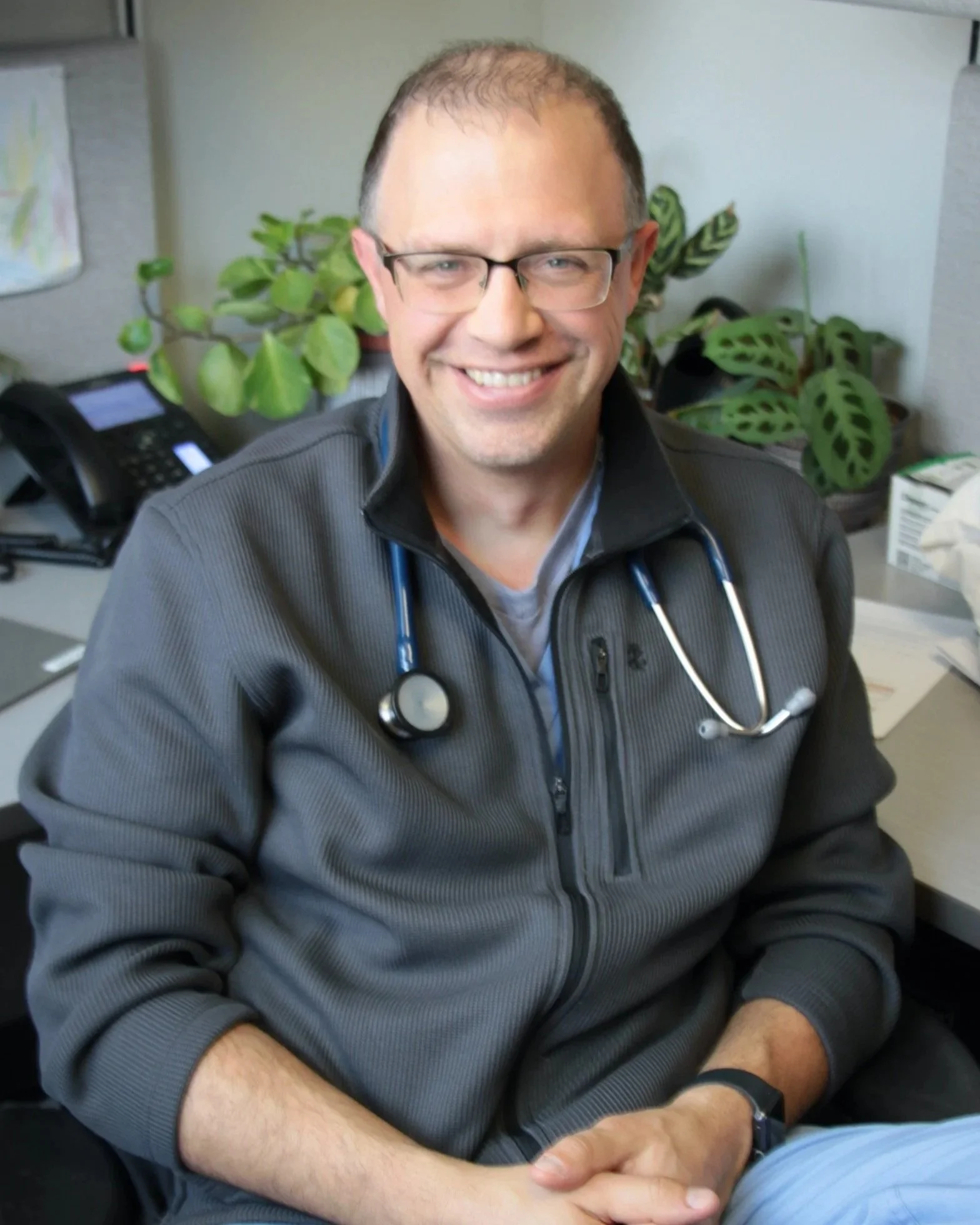
If you didn’t see my bio, just a quick introduction - Hey! I’m Ryan Dick!
I am a family medicine provider who has been in practice for 20 years in the St. Paul, Minnesota area. I am so very blessed by a supportive wife (Hi Jen!) and 3 rambunctious kids. I worked in a private clinic group most of my career and am grateful to have supported so many families in all stages of life. I did quite a bit of obstetrics for the first part of my career, but finally hung up my “delivering shoes” 18 months ago when starting my practice at EverWell Primary Care.
There was a very special day for me in January of 2025 where I found the watershed moment of “I can’t do another 10 or 20 years of this.”
See more patients.
Take more phone calls.
Keep up on the paperwork.
Don’t make any mistakes.
Make compromises at the expense of your family and personal health.
Rinse, repeat.
I realized in a slowly freezing car how disappointed I would be in myself to not give this a try. It was in that moment that I hurdled to the other side of a big mental fence and decided to give DPC a try.
18 months later, EverWell Primary Care is a thriving clinic that now cares for hundreds of patients. It also serves as one of the many examples of how providers can thrive without a large organization or insurance company telling them how to do their work.
EverWell Primary Care is a family medicine clinic that is actively looking for other like-minded providers. We provide pediatric and adult care to patients; I would highly recommend looking at the broad range of services we provide! As my practice has become full, there is a waitlist growing that would help a new provider get their new DPC work up and running.
If you are feeling inspired, have questions, want to know more about EverWell - please always feel free to give me a call at 651-300-7823 or email at rdick@everwellprimarycare.com.
Ryan Dick, MD